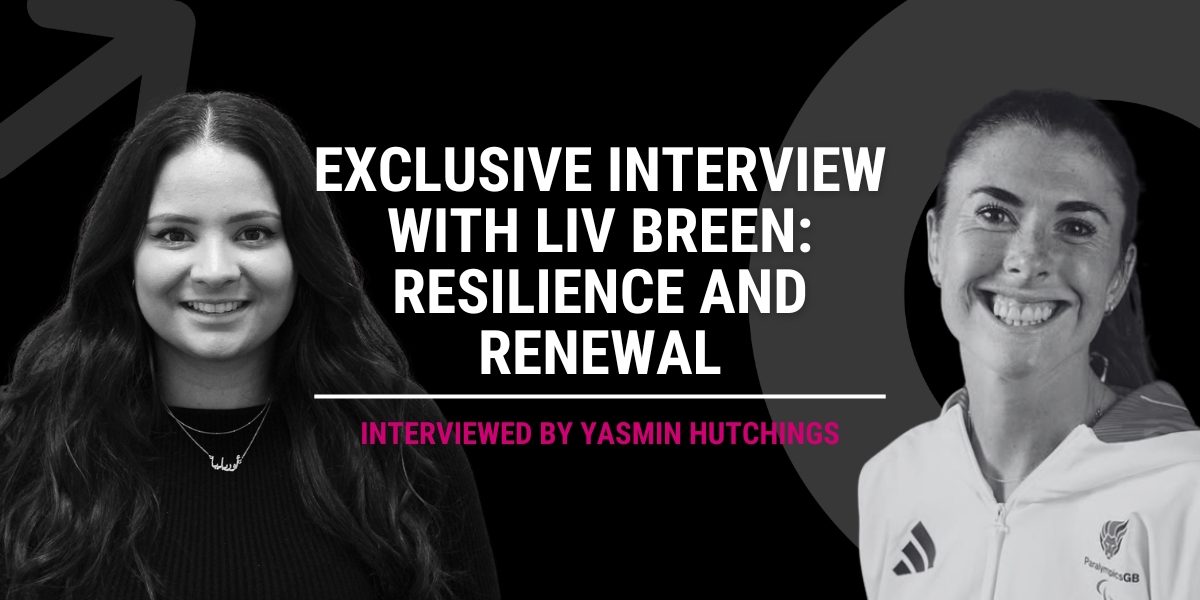
In this candid conversation with Yasmin Hutchings, Paralympic athlete Liv Breen opens up about her journey through elite sport. She shares what it takes, mentally and physically, to prepare for world-class competition, and how she rebuilds after setbacks. Her reflections on training, recovery and rediscovery of purpose offer powerful lessons far beyond the world of athletics.
Liv is a 28-year-old Paralympian with over 13 years of competitive experience. As team captain for the British Paralympic team in Paris, she demonstrated strong leadership and earned deep respect from the sporting community. Beyond her medal-winning success, she champions disability sport and inspires younger athletes through community work, mentoring, and her award-winning podcast.

What does your typical training schedule look like before a Paralympics?
“My training is intense,” Liv says. “Monday, Wednesday, and Friday are my big days – sprinting, jumping, and gym work. Tuesday and Saturday are lighter sprint sessions, and I take Thursday (which is usually media day) and Sunday off to rest. I’m training around six hours a day.” She admits balancing her social life with training is tough: “I’m not very good at chilling!” she laughs.
How do you stay consistent and motivated?
Liv explains that even after more than a decade in sport, there’s always room to grow. “I still feel there’s so much I can improve. I love what I do, and I know that by showing up every day, I might be helping inspire the next generation.”
She recounts a moment with a mother worried about her son, who has cerebral palsy: “I told her, ‘Look at me. I have a disability and a full, brilliant life. Your son can too.’ That’s why I do what I do.”
What is your preparation like for a Games?
Liv spent about four weeks in total in Paris; two weeks at a holding camp in Southern France, and two weeks at the Games themselves. She finds the holding camp invaluable for bonding with teammates and avoiding distractions: “It really helps us stay focused. Being close to home in Paris made it feel almost like a home Games.”
As team captain, that period felt particularly meaningful. “It was special,” she says, “Because it was a chance to lead and to support the team away from the spotlight.”
How do you mentally prepare for major competitions?
“It’s all about having the right people around you,” Liv explains. “A smaller team this time actually helped – we were closer, more connected. And being physically ready makes you mentally confident too.”
She credits her support system; coaches, family, and friends for keeping her grounded and focused. “They remind me why I do this.”
How do you process results after a competition?
Rather than dwell on disappointment during the Games, Liv makes a conscious decision to embrace the full experience. “When I got home, I took three weeks off. I went on holiday, saw friends and family. I didn’t talk about the Paralympics for about two months. I needed that space to reconnect with who I am outside of sport.”
Looking back, how do you feel about Paris?
“It was tough, no doubt. I didn’t get the results I wanted,” she admits. “But I gave it everything and have no regrets.”
Now, she’s focused on the future; in particular, preparing for Los Angeles. She’s also exploring life beyond athletics, including work experience with Sky. “At 28, I’m thinking more about what’s next. But I’m still hungry to compete.”
How do you come back stronger?
“I’ve been working closely with physios and coaches to improve technically, really drilling into what didn’t go well and how to fix it,” she says. “But I’m also just happy to have rediscovered my love for training. I feel joy again.”
That perspective is crucial for her: “Sport is a huge part of my life, but it’s not everything. That’s what keeps me balanced.”
What helps you reset mentally after setbacks?
“You have to talk about it,” Liv says firmly. “Bottling emotions doesn’t help. Speak to someone – your coach, a psychologist, a friend.”
She adds, “I tell myself: ‘Today is a new day. Wake up with a smile. You can’t control everything. Think about what you’ve already achieved and what’s still ahead of you.’”
What advice would you give your younger self?
“I’d say, ‘Don’t get so wrapped up in it.’ Results are important, but they aren’t everything. Looking at old photos really helped; they reminded me of who I was beyond sport. Sometimes, you just have to take a step back.”
What role do your sponsors and supporters play?
“I honestly feel so lucky,” Liv says. “Knowing sponsors like STR are behind me, cheering me on, means the world. When sponsors believe in you, you start believing in yourself even more. “They’ve helped me achieve so much. I’m just incredibly grateful.”
Final thoughts
Liv Breen’s story is one of resilience, renewal and perspective. She reminds us that success isn’t only measured by medals, but by growth, balance and finding joy again after hardship. Her journey is not just about sport; it’s a roadmap for anyone dealing with disappointment and working towards renewal.